Beehiiv is where I’ll be sharing a selection of posts from “But anyway, I digress…” which is my regular blog over on my personal website — to see all my posts in full, and for more information about my writing, head over to philipholyman.com

2nd September 2025
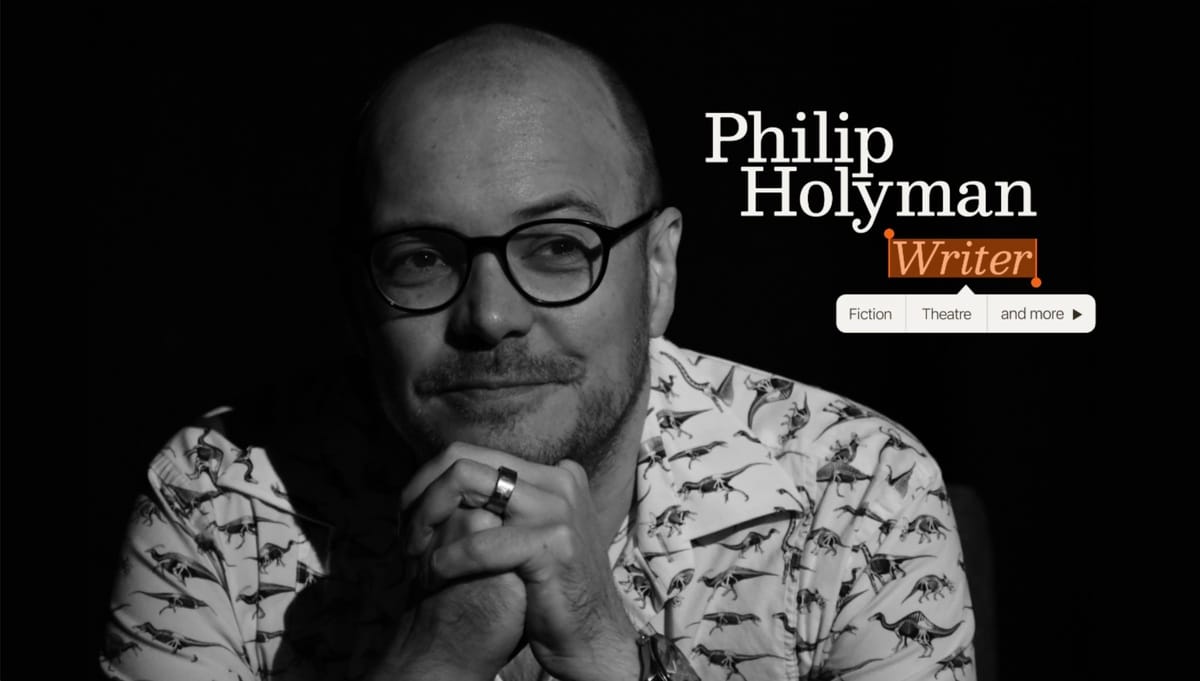
Today’s banner image is especially for one of my most attentive readers. You’ll know who you are — hope it makes you smile!
So, this post features a lot of quoting, or rather, a lot of quoting of quoting, so bear with me — all will become clear, I promise.
I follow Mason Currey’s Subtle Maneuvers on Substack, and in a recent post entitled Courtney Love’s excellent advice for young artists, he quotes the singer-songwriter from an interview she gave on Bella Hadid’s Fashion Neurosis podcast:
Love: If you have a plan B, you’re gonna do the plan B. That’s always a truth.
Freud: Yeah, it’s so true. That’s such a good tip: Don’t ever have a plan B.
Love: It’s really the truth. If you have a plan B, you’re going to do it.
I also recently read an old Guardian article by Patrick Barkham, Story of cities #34: the struggle for the soul of Milton Keynes, where he quotes Fred Roche, General Manager of Milton Keynes Development Corporation who said, in 1970, “Make no small plans.”
Turns out Fred Roche was himself (slightly mis)quoting the American architect Daniel Hudson Burnham who, in 1871, said:
“Make no little plans. They have no magic to stir men’s blood and probably themselves will not be realized. Make big plans; aim high in hope and work.“
There’s more of the quote beyond that full stop, but what’s here is the important bit, the interesting bit, for me at least.
150 years apart, there’s still lots that Love and Burnham’s philosophies have in common, I think, and it all tracks back round to what Brian Clarke had to say in my most recent post, about making artistic statements that are absolutes. All three of these artists are encouraging us not to settle, not to delude ourselves with the good-enough-will-do, not to aim for something less-than and certainly not to accept anything less-than.
The problem with plans is that they have a nasty habit of not working out the way we wanted them to.
We bear some responsibility for this, that’s a fact, but as The Courage To Be Disliked reminds us, other people have a hand in it, too: “All problems are interpersonal problems.”
The Stoics have been reminding us for centuries to focus on what’s within our control, and yet we still spend so much time imagining or worrying about the judgement of others on anything we produce — often, before we’ve even produced it. We take one negative comment to heart and treat it as the truth about what we’ve made and a verdict on who we are. We hear one negative voice louder than we might hear a hundred positive voices reacting favourably to the same thing. And if no one is talking about what we make, we still infer that silence to mean nobody likes what we’ve done (or us, for that matter) — that’s what they’re thinking; they’re just not saying it.
What Love and Burnham and Clarke are exhorting us to do demands a huge step away from this kind of headspace, replacing it with an attitude that almost seems to border on that magnificent Gen Z construct: being delulu.
Certainly, their approaches strip away (most of) the potential for things to be anything other than how you decide they’ll be, and (mostly) deny the possibility that there’s any other direction than the one you’ve set out in. In fact, there’s always an implicit awareness of an unpalatable alternative lurking in the margins — the Plan B that Love is so desperate not to fall into, the magic-lacking little plans Burnham dreaded, the less than absolute work Clarke avoided like the plague.
There are always different outcomes we can imagine or anticipate, even if we can never know for sure how the course of those hypothetical non-events would have turned out. It’s the whole Gwyneth Paltrow in Sliding Doors thing, or, if your reference points veer elsewhere, it’s Robert Frost and The Road Not Taken.
As usual, Oliver Burkeman has something succinct and insightful to say relating to all this; if anything, he’s quietly more radical than Love, Burnham and Clarke put together when it comes to figuring out which pathways to pursue. “Don’t worry about burning bridges,” he says in the last column he wrote for The Guardian (4th September 2020): “irreversible decisions tend to be more satisfying, because now there’s only one direction to travel – forward into whatever choice you made.”